
Stainless steel sanitary pipe fittings are critical in maintaining contamination-controlled systems across many industries. Components such as ferrules, clamps, sanitary valves, and fittings are made to maintain clean fluid paths. They help minimize contamination risks and make cleaning easier.
Tri Clover Fittings
The choice of Hygienic Fittings and Ss Sanitary Fittings strongly affects product safety, system uptime, and adherence to regulations. The material grade, surface finish, and compatibility of connections are critical factors. They influence the ease with which a system can be validated and maintained.
Operations teams need reliable suppliers and detailed catalogs when choosing the correct parts. Brands like CSI and distributors such as Installation Parts Supply provide essential information. Their catalog listings, lead times, and customer reviews can guide purchasing decisions for Sanitary Valves And Fittings.
Important Takeaways
- Stainless Steel Sanitary Pipe Fittings are necessary for contamination control in clean systems.
- Material grade and surface finish impact cleanability and corrosion resistance.
- Hygienic Fittings compatibility lowers downtime during maintenance and upgrades.
- Catalogs and reviews from CSI and Installation Parts Supply support dependable sourcing.
- Choosing the right Sanitary Valves And Fittings helps ensure product quality and regulatory compliance.
Sanitary Pipe Fittings And Hygienic Fittings For Clean Systems: Overview
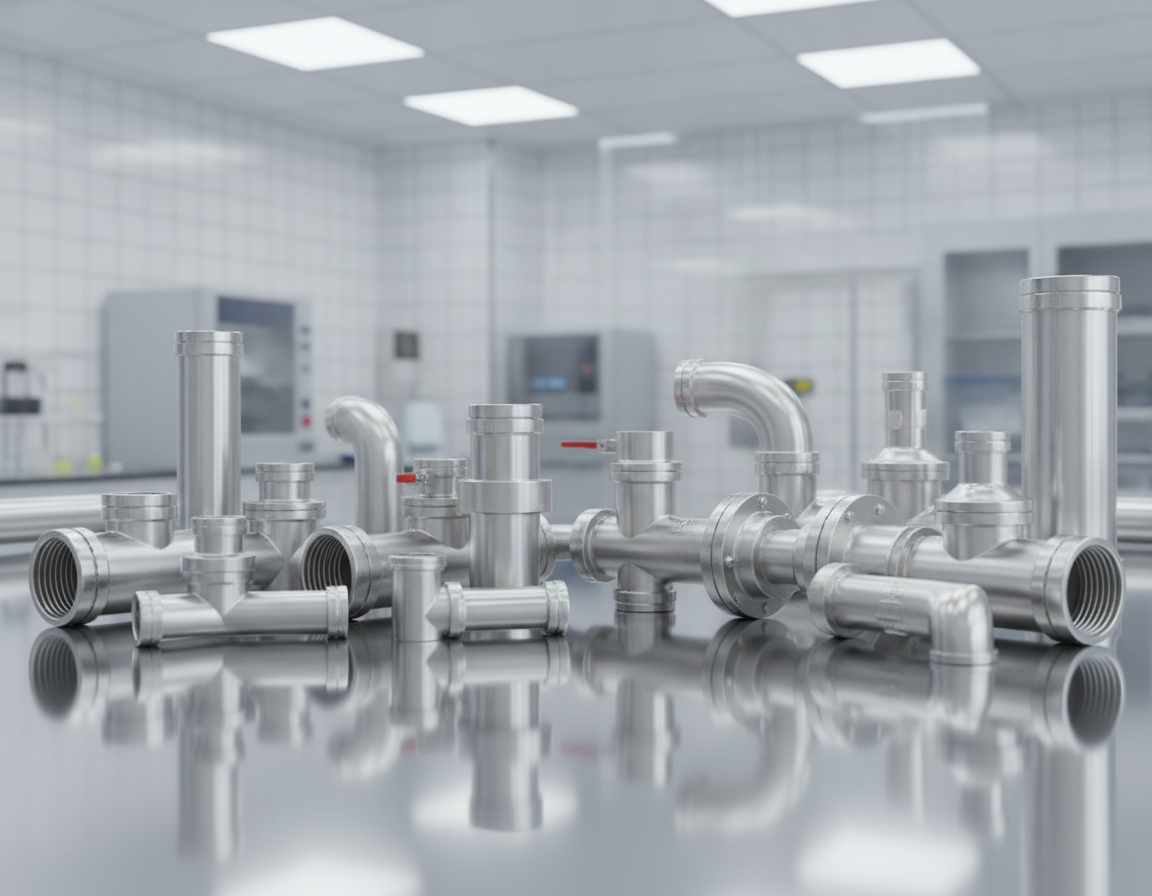
Clean-process systems depend on components made for hygiene, safety, and efficiency. A sanitary fitting should include smooth surfaces, tight seals, and accessible cleaning points. These features are essential for preventing contamination and supporting clean-in-place and sterilize-in-place routines.
What Sanitary Fittings Are Designed To Do
Sanitary fittings, often called hygienic fittings, are designed to create crevice-free connections. That design limits bacterial growth and helps maintain product purity during transfer and processing. Their design facilitates quick cleaning and minimizes cross-contamination risks.
Industries That Use Hygienic Fittings
Food processors use hygienic fittings to support safety standards and reduce spoilage risk. Beverage manufacturers use these fittings to protect flavor, clarity, and shelf life. Pharmaceutical plants choose fittings that meet strict regulatory requirements.
Biotech facilities require precise sanitary connections for cell culture and fermentation. These industries focus on traceability, repeatable cleaning, and material compatibility.
Why Stainless Steel Is Preferred For Sanitary Applications
Stainless steel is widely chosen because it delivers corrosion resistance, mechanical strength, and easy cleanability. Grades like 304 and 316L withstand chemicals and high temperatures. They also support smooth finishes, low Ra values, and electropolished surfaces.
Stainless components help limit bacterial growth and extend service life during aggressive cleaning cycles. Tri Clover Sanitary Fittings and other standardized interfaces streamline the assembly and maintenance of robust hygienic systems.
Stainless Steel Sanitary Pipe Fittings
Stainless steel sanitary pipe fittings are essential in modern clean systems for food, beverage, and pharmaceutical industries. Choosing the right material, component type, and surface finish limits contamination risk and makes cleaning easier. This guide will explain common grades, typical component families, and finish options for hygienic performance.
Sanitary Stainless Steel Materials And Grades
Type 304 stainless steel delivers corrosion resistance and mechanical strength, making it suitable for many general processing lines. It is commonly used for tanks, structural supports, and areas where product-contact risk is lower.
Type 316L provides stronger resistance to chloride pitting and crevice corrosion. Pharmaceutical manufacturers often choose 316L for wetted parts because its low carbon content helps reduce sensitization during welding.
Matching grades across components ensures corrosion resistance and prevents galvanic issues when parts are joined. Specifying 304 or 316L at the design stage makes easier the procurement of SS Sanitary Fittings and associated parts.
Common Sanitary Fitting Types And Their Roles
Ferrules serve as the basic connection points for butt-weld and weld-in assemblies. They are available in 304 or 316L with polished IDs to match process piping.
Two-piece clamps, known as Tri-Clamp or Tri-Clover style, support quick assembly and disassembly for cleaning. Couplings and sanitary weld fittings help create smooth lines and weld-ready connections.
Sanitary Hose Fittings and Sanitary Weld Fittings link flexible lines and permanent pipe runs. Sanitary Valves And Fittings manage flow while maintaining cleanable contours. Designing with compatible SS Sanitary Fittings helps lower leaks, downtime, and maintenance problems.
Why Surface Finish Matters For Cleanability
Surface roughness directly controls how residues cling to metal surfaces. A 32RA internal finish is a common spec that combines cost and cleanability for most food and beverage applications.
Electropolishing further refines the metal and enhances passivity. This treatment helps limit microbial harborage and improves corrosion resistance in aggressive environments.
Specifying matching finishes across ferrules, clamps, valves, and weld fittings supports hygienic integrity. When parts share matching 32RA or electropolished surfaces, cleaning validation is more reliable.
| Sanitary Component | Usual Material | Standard Finish | Typical Application |
|---|---|---|---|
| Ferrules butt weld / weld-in | 304 or 316L | 32RA internal/external finish | Sanitary welded pipe ends |
| Two-piece Tri-Clamp clamps | 316L commonly preferred | 32RA or electropolished | Quick-release hygienic joints |
| Weld fittings and couplings | 304 or 316L stainless | Standard 32RA or electropolished | Welded joins and directional changes |
| Sanitary flexible-line fittings | 316L commonly used | Electropolished product-contact surfaces | Flexible process lines and transfers |
| Sanitary Valves And Fittings | 316L on wetted surfaces | Polished internals | Hygienic flow control |
Triclover Fitting Options And Tri-Clamp Catalog Guidance
Tri Clover Pipe Fittings follow strict dimensional standards that support cross-manufacturer compatibility. DIN 32676 and DIN 11864-3A set ferrule face geometry and clamp interfaces. These standards help sanitary lines remain leak-resistant, cleanable, and easy to maintain. These standards make easier the selection of Triclover Fittings for food, beverage, and pharmaceutical applications.
When perusing a Tri-Clamp Fittings Catalog, compare size ranges, material specifications, and surface finishes. Catalogs often list two-piece clamps from 0.25″ to 4″, including single-pin options and matching gaskets. Ferrules are usually shown with length, material, and finish details, with 304 and 316L 32RA options common for improved cleanability.
Important catalog items include clamps, ferrules, and gasket sets sized by inches or DN. Prices for small two-piece clamps start under ten dollars, while larger clamps are in the low double digits. Each Triclover Fitting entry should list OAL, ID/OD finish, and compatible gasket material. This helps ensure the correct part is chosen at the time of order.
High-pressure applications may require double-bolt or heavy-duty two-piece clamps. These clamps may use a 304 stainless body with brass nuts to balance strength, corrosion resistance, and tightening performance. For critical process lines, choose high-pressure clamps by rated clamp force and confirm compatibility with existing Tri Clover Fittings to avoid mismatches.
Material choice affects service life, cleanability, and corrosion resistance. 316L ferrules provide better chloride resistance in harsh or chemically aggressive environments. Make sure the Tri-Clamp Fittings Catalog lists ferrule metallurgy, clamp construction, and finish details. This supports the selection of Tri Clover Pipe Fittings based on application needs and service conditions.
Spec sheets should include clamp size charts, ferrule dimensions, surface finishes, and part numbers to streamline procurement. A well-organized catalog makes Triclover Fittings replacement faster and helps minimize downtime. Choose suppliers that publish detailed specifications for each Tri Clover Fitting so interchangeability across brands can be confirmed.
Sanitary Connections, CSI Sanitary Fittings, And Compatibility
Sanitary connections are essential for joining pipes, valves, pumps, and equipment in clean systems. The right joint type is important for maintaining hygiene and efficiency. This section will review common connection styles, brand interchangeability, and customer feedback on supplier reliability.
There are various connection types, including clamp connections like Tri-Clamp, butt-weld and socket-weld fittings, threaded links, and sanitary hose fittings. Each type has its own advantages and disadvantages regarding assembly speed, cleanability, and leak risk.
Clamp connections are valued for their quick assembly and ease of disassembly for cleaning. Welded joints provide the smoothest internal profile for CIP and SIP routines. Threaded fittings are suitable for low-risk applications where product contact is not a concern. Sanitary hose fittings need matched ferrules and a secure Sanitary Coupling to help prevent leaks.
Brand compatibility is important when mixing components. CSI Sanitary Fittings and Csi Fittings align with common standards like Tri-Clamp and DIN, making them generally interchangeable with other manufacturers. Steel & O’Brien publishes specification sheets that help confirm compatibility with major Tri-Clamp systems when the standards match.
To confirm compatibility, match nominal size, sealing face, material grade, and surface finish. Verify standards such as DIN 32676 and DIN 11864 on datasheets. Mismatched finishes or grades can cause corrosion, leakage, or product-residue traps.
Customer feedback offers practical insights into supplier reliability. Reviews for CSI show consistent part quality and quick shipping, with some buyers experiencing next-day delivery on stock items. Other customers highlight responsive communication after order questions or technical inquiries.
When comparing suppliers, review lead times, documented quality, return policies, and after-sale support. Reliable shipping and clear spec sheets limit downtime and avoid costly returns when purchasing Sanitary Connections, CSI Sanitary Fittings, or components from Steel & O’Brien.
| Sanitary Connection | Ideal Use | Hygienic Cleanability | Cross-Brand Notes |
|---|---|---|---|
| Clamp-style sanitary connection | Product-contact lines needing frequent disassembly | High cleanability with a removable gasketed seal | Strong interchangeability when standards, faces, and sizes align |
| Butt-Weld / Socket-Weld | Permanent process runs requiring smooth internal bores | Very high after proper polishing | Cross-brand fit depends on matching standards and dimensions |
| Threaded fitting connection | Utility lines and non-product-contact service | Moderate because threads may trap residue | Use carefully and confirm grade, thread style, and finish |
| Sanitary hose and ferrule connection | Flexible transfer lines and temporary connections | Good if ferrule and clamp are matched | Requires matching ferrule profile and Sanitary Coupling for leak-free fit |
Selection Guide For Sanitary Pipe Fittings Stainless And SS Sanitary Fittings
Choosing the right sanitary components involves a few focused steps. This guide guides you match size, material, and finish to your process needs. Use the metrics and checks below to limit downtime and ensure hygienic performance.
Start with size, designation, and connection standard. Confirm DN and TC stamping and verify DN TC inch equivalents before ordering. Common catalog mappings include DN20, DN25, DN32, DN40, DN50, DN65, and DN100 matched to 0.25″–4″ Tri-Clamp sizes. Check mating surfaces, gasket groove styles, and flange faces to ensure compatibility.
Material selection is essential. For routine food and beverage lines, 304 covers strength and cleanability needs. For pharmaceutical, chloride-exposed, or aggressive-cleaning processes, choose 316L for better corrosion resistance and weldability. Most suppliers list 316L ferrules and fittings as standard options for harsh environments.
Surface finish and gasket selection affect cleanability, seal life, and validation results. Specify finish targets such as 32RA or electropolished surfaces. Match gasket materials like EPDM, PTFE, or silicone to temperature, chemical exposure, and product contact requirements. Confirm gasket cross-section, clamp type, and clamp pressure to help prevent leaks.
Assess pressure and clamp type. Standard clamp clamps handle everyday sanitary services. High-pressure applications require reinforced clamps, double-bolt designs, or specialized nuts and hardware. Review pressure ratings in the catalog and select clamps rated above operating pressure for safety margin.
Consider Copper Tri Clamp Fittings for niche needs. Copper tri clamp fittings offer conductivity and antimicrobial benefits in select systems. Before pairing copper with stainless lines, validate compatibility with cleaning agents, product chemistry, and dissimilar-metal corrosion risk.
Final verification steps can save money and prevent ordering mistakes. Compare catalog part numbers against DN/TC inch equivalents, confirm grade markings, and request mill test reports when needed. Keep records of gasket type, finish specification, clamp pressure, and part numbers to streamline spare-parts ordering and maintenance.
Sanitary Coupling And Sanitary Weld Fittings Installation, Maintenance, And Best Practices
Keeping sanitary connections clean and reliable is important in hygienic systems. Follow specific steps for assembling tri-clamp assemblies and welded joints to avoid leaks and contamination. Keeping detailed records of materials, finishes, and maintenance is necessary for traceability and audits.
Proper assembly steps
Begin by thoroughly cleaning ferrule faces and checking gaskets for any defects. Place the gasket between the ferrule faces, ensuring the sealing surfaces are aligned. Next, install the clamp, hand-tighten it, and then apply specified torque using a calibrated wrench. For high-pressure applications, use double-bolt clamps with suitable hardware and follow recommended torque values to avoid over-compression.
Sanitary Weld Fittings best practices
For weld joints, prepare tube ends to the specified Ra finish before welding. Use inert gas for purging to prevent oxidation on 316L stainless steel. After welding, inspect the weld contour and smoothness. If needed, rework rough spots through controlled grinding and electropolishing to restore low roughness and maintain hygiene.
Routine Sanitary Maintenance
Run CIP and SIP cycles according to process requirements. Regularly inspect ferrule faces, clamps, and gaskets after thermal cycles and scheduled cleanings. Replace gaskets when they show hardening, extrusion, cuts, or permanent deformation. Always verify clamp torque and alignment after each maintenance activity.
Common issue troubleshooting
Identify leaks by first checking clamp seating and gasket condition. Misaligned clamps can lead to uneven compression and leaks. To correct this, loosen the assembly, realign it, and retighten to the specified torque. For gasket extrusion or failure, ensure the correct durometer and material are used, and confirm the groove dimensions match the ferrule specifications.
How to address surface damage
Surface damage such as scratches, pits, or crevice corrosion can trap microorganisms and residues. Minor scratches may be polished out and electropolished to restore the required Ra level. Components should be replaced if pitting penetrates the surface or if polishing would remove too much material.
Recordkeeping and documentation
Keep detailed records of material grades, surface finishes, gasket types, clamp models, and service dates. Maintain calibration records for torque tools and welding equipment. Accurate records help with regulatory compliance and expedite troubleshooting efforts.
| Task | Frequency | Main Step | Service Notes |
|---|---|---|---|
| Clamp torque check | After assembly and monthly | Check with calibrated torque wrench | Use manufacturer torque table for Sanitary Coupling sizes |
| Gasket condition check | At scheduled intervals or whenever defects appear | Look for damage, compression set, or extrusion | Replace only with compatible gasket material |
| Ra and surface condition check | Every quarter or after welding | Measure roughness and inspect visually | Restore finish when roughness exceeds the process specification |
| Weld inspection | After installation, then yearly | Check for undercut, porosity, discoloration, and profile | Repair and re-polish Sanitary Weld Fittings as needed |
| Cleaning and sterilization validation | Per process cycle | Monitor time, temperature, concentration | Document results for validation and regulatory review |
Where To Buy Sanitary Fittings: Catalogs, CSI Fittings, And Installation Parts Supply
A detailed catalog review is a key first step. Look for a Sanitary Fittings Catalog that lists material grade, surface finish, dimensions, and pressure rating. It should also mention standards like DIN 32676 or DIN 11864-3A. Before ordering, confirm item codes, stock status, lead times, and compatibility to avoid delays.
When reviewing a Tri-Clamp Fittings Catalog, compare clamp type, gasket compatibility, dimensional specifications, and material grade. Check whether ferrules and fittings are finished to 32RA, electropolished, or another required specification. A detailed catalog makes matching gaskets and clamps easier during assembly.
Check Csi Fittings performance by reading independent reviews and supplier lead times. Many buyers report fast shipping for common parts and responsive service for quality or order questions. Confirm return terms for precision components to protect tight-tolerance projects.
Use the following example listing to estimate market pricing and compare common stocked sizes. Prices reflect typical catalog entries and provide realistic budgets for procurement.
| Item | Size | Grade | Surface Finish | Catalog Price (USD) |
|---|---|---|---|---|
| Single-pin two-piece clamp | Quarter-inch to three-quarter-inch | 304 | Standard catalog finish | Approx. $3.91 |
| Two-piece single-pin clamp | One-inch size | Type 304 stainless steel | Standard finish | $4.91 |
| Two-piece single-pin clamp | 2 inch | Type 304 stainless steel | Standard finish | Approx. $5.99 |
| Single-pin two-piece clamp | Two-and-a-half-inch size | 304 | Standard finish | Approx. $6.93 |
| Single-pin two-piece clamp | 3 inch | Type 304 stainless steel | Standard finish | $7.54 |
| Two-piece single-pin clamp | 4 inch | Type 304 stainless steel | Standard | $9.16 |
| TC sanitary ferrule | 2″ size, 1.125″ overall length | 316L | 32RA internal and external finish | Approx. $4.24 |
| TC sanitary ferrule | 2″ — 1.125″ OAL | 304 stainless | 32RA ID and OD | $4.06 |
| Ferrule TC | 3 inch | Type 316L stainless steel | 32RA ID and OD | Approx. $6.15 |
| Double-bolt high-pressure clamp | 1.5 inch | Type 316 stainless steel | Polished | $12.93 |
| Double-bolt high-pressure clamp | 2″ | Type 316 stainless steel | Polished sanitary finish | Approx. $14.62 |
| High-pressure sanitary clamp | 3 inch | 316 stainless | Polished | $20.26 |
Installation Parts Supply is a U.S.-based supplier for sanitary valves, ferrules, clamps, and related process parts. Use their online listings to verify availability, finishes, and exact pricing for specific Tri-Clamp Fittings Catalog items. Review product pages to cross-check pressure ratings and gasket materials before purchase.
When sourcing parts, prioritize catalogs that clearly separate 304 from 316L, state surface finish, and cite applicable standards. A targeted Sanitary Fittings Catalog search can streamline procurement and reduce returns on critical process components.
Sanitary Pipe Fittings Summary
Stainless Steel Sanitary Pipe Fittings are critical for maintaining cleanliness in various industries. The choice between 304 and 316L materials, along with surface finishes like 32RA or electropolishing, supports cleanability. This minimizes contamination risks significantly. Ensuring Tri Clover Fittings and related parts meet standards such as DIN 32676 is important for tight Sanitary Connections and easier interchangeability.
When selecting fittings, consider the material, finish, and connection type. This includes Tri-Clamp, weld, hose, or threaded connections, based on pressure, product contact, and regulatory requirements. Use high-pressure clamps where process pressure or safety margins require them. Consistency in gaskets, clamps, and ferrules limits leaks and simplifies maintenance. Proper installation and regular cleaning extend the lifespan of fittings and ensure compliance with hygiene standards.
Catalogs provide competitive pricing for two-piece clamps, ferrules, and high-pressure options. This helps with balanced cost and reliability in procurement decisions. When searching for where to buy sanitary fittings, focus on reputable U.S. suppliers. They should list product specifications, finishes, and standards to ensure compatibility with CSI and other branded fittings.
Following these guidelines helps streamline system design, sourcing, and maintenance. Clear specifications, consistent materials, and reliable sources help minimize downtime. That helps protect product quality in hygienic processing environments.