
KZD-CncMmachining.com proudly excels in delivering CNC Precision Machining know-how for a wide range of industry sectors like the aerospace, medical, energy, and automotive sectors. It uniquely combines state-of-the-art machining equipment with a team of veteran engineers. Their goal is to transform intricate designs into tangible products. Top-tier operations such as RAM Tool and WessDel set a high benchmark with their expansive capabilities, strict ISO-certified quality practices, and a wide mix of machines that handle large workpieces and strict precision demands.
Precision CNC machining significantly decreases production cycle times, cuts material waste, and improves product consistency. It’s accomplished by a synergy of CAD/CAM-driven programming, state-of-the-art machining centers, and rigorous quality controls. A trusted CNC shop delivers custom CNC machining and contract manufacturing options. It smoothly scales from early prototypes to full production volumes, prioritizing thorough inspection and product traceability at every step.
At KZD-CncMmachining.com, we pride ourselves on a customer-first approach, thorough metrological evaluation, and the provision of end-to-end solutions. Our capabilities support single-run CNC machining projects and high-volume component production. With the right blend of advanced machinery plus disciplined process control, we guarantee repeatable, accurate outcomes.
Main Takeaways
- KZD-CncMmachining.com is dedicated to CNC Precision Machining services for many industries.
- High-end equipment including 5-axis and horizontal mills boosts capacity for complex components.
- CNC precision machining cuts mistakes and improves repeatability via CAD/CAM workflows and inspection.
- Custom CNC machining plus scalable CNC services support prototype to production runs.
- Metrology and quality systems are vital to achieve strict tolerances and required industry standards.
CNC Precision Machining Services
Digital designs are transformed into accurate components for aerospace, medical, and industrial uses using CNC precision machining. Specialists at operations like RAM Tool and Precision Automation facilities utilize CAD/CAM files for equipment setup. They operate mills, lathes, and routers to create dies, prototype tooling, and bespoke components. Thorough inspections and punctual deliveries define this process.
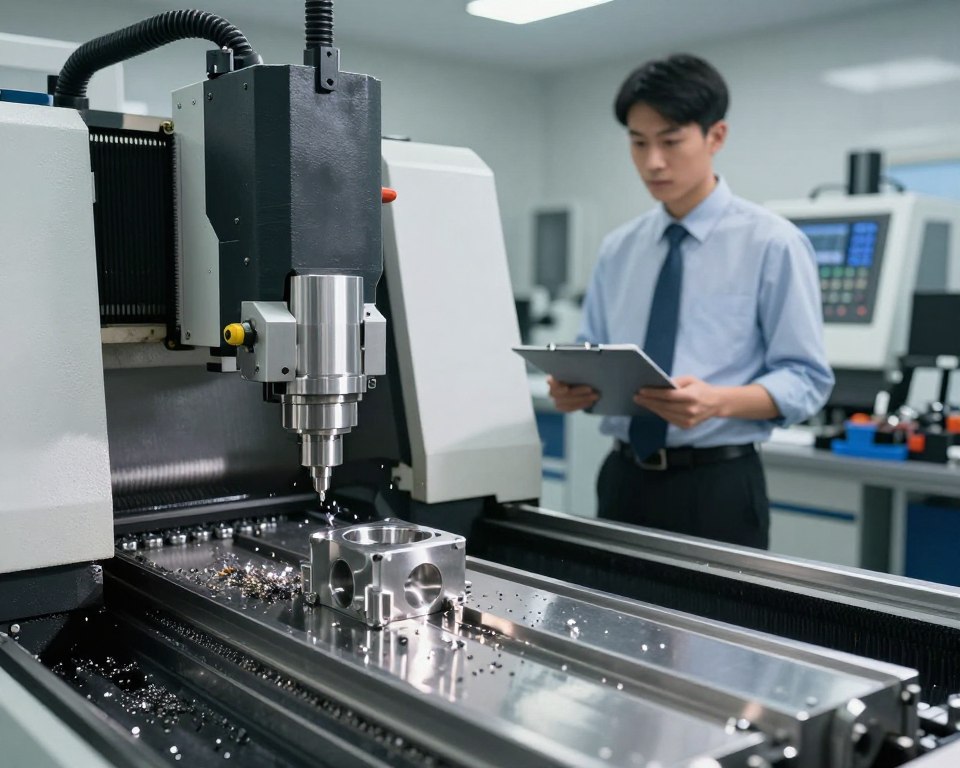
Definition And Core Advantages Of CNC Precision Machining
CNC manufacturing moves cutting tools through computer numerical control (CNC), ensuring exceptional accuracy. It remarkably diminishes manual setup, curtails cycle times, while reducing mistakes. Services often include milling, turning, true 5-axis machining, and wire EDM, addressing intricate shapes and exacting tolerances efficiently.
Typical Tolerances And Material Capabilities
Precision CNC machining routinely reaches tolerances as minute as 0.0002 inch on steel and titanium alloys like Ti-6Al-4V alloy. Typical stainless grades machined include 15-5, 17-4, 304, 316, and 420 stainless. The material mix extends from aluminum and zinc for die casting to robust steels, titanium, and engineered plastics for diverse industrial needs.
How Precision CNC Machining Improves Repeatability And Cuts Error
CAM programming, robust tool libraries, and automated probing reduce variation, boosting consistency. Metrological instruments, including CMMs and laser scanners strengthen part-to-part accuracy. This improved efficiency speeds the progression from prototypes to full-scale production while maintaining strict quality control with traceable records.
Comprehensive CNC Machining Services For Custom Components
Manufacturers often need comprehensive capabilities for fast turnaround on precision components. Today’s CNC machine shops combine CNC milling and CNC turning with specialized processes. This accommodates prototype work, small batches, and large-scale production. Shops such as RAM Tool, WessDel, and Precision Automation show integrated workflows. These enhance design, inspection, and shipping processes for customized CNC machining programs.
CNC milling services offerings handle complex geometries and prototype fabrication utilizing multi-axis milling platforms and deep CAM libraries. Operations manage aluminum die-cast tooling and complex features such as pockets and ribs. Techniques like laser scanning and reverse engineering workflows strengthen inspection databases. This speeds revisions and helps keep timelines on track.
CNC turning services operations specialize in cylindrical parts and large-scale shafts. The arrangement of lathe-based cells ensure uniformity and consistent surface finishes. Merging turning and live tooling allows for the creation of complex parts in a single sequence. This process cuts processing time while minimizing costs for large production programs.
EDM and wire EDM techniques serve as solutions for intricate designs in difficult-to-machine materials. These technologies craft thin slots, sharp internal angles, and refined profiles that milling can’t achieve. Supporting steps such as heat treating, deburring, and finishing work ensure the parts reach customers in a ready-to-use state.
| Capability | Typical Use | Value Delivered |
|---|---|---|
| Multi-axis CNC milling | Prototypes, complex contours, die tooling | Reduces setups, improves accuracy, supports tight tolerances |
| CNC turning plus live tooling | Shafts, bushings, threaded components | Accelerates output, combines ops, reduces lead time |
| Wire EDM & EDM capability | Hard materials, thin features, mold components | Enables intricate shapes, maintains fine detail, and preserves hardness |
| Laser scanning & metrology | Reverse engineering, inspection, and quality control | Confirms parts, supports revisions, ensures compliance |
| Heat treating and finishing | Material strengthening, corrosion resistance, final appearance | Provides turnkey parts ready for assembly/end use |
Selecting the right CNC machine shop means aligning machinery with your part specs. Choose facilities that integrate CNC milling, CNC turning, and EDM alongside inspection and assembly capabilities. This synergy helps manage lead times. It helps ensure delivered components meet engineering objectives precisely.
Advanced Machining Technology And Equipment
High-performing facilities implement a synergistic array, involving multi-axis platforms, swift centers, and formidable machinery for demanding designs and tight tolerances. The allegiance to esteemed brands, such as Hermle, DMG Mori, OKK, and Mitsubishi equipment, signals a focus on productivity and consistency through precision machining operations.
5-Axis And Multi-Axis Machining For Complex Components
Five-axis machining centers enable engineers to combine operations that once required multiple setups. Applying real 5-axis machining accelerates production of components with deep pockets, angled features, or complex geometry. This reduces manual intervention, shortens the production cycle, while maintaining strict geometric fidelity, particularly for aerospace and medical devices.
High-Speed Machining Centers And Horizontal Boring Mills Equipment
High-speed milling adoption produces superior surface conditions while shortening lead times when working on softer materials and composites. On the other hand, horizontal boring mills improve tool effectiveness and reduce chip interference on sizable components. The strategic assimilation of high-speed and horizontal apparatuses boosts overall versatility to adeptly tackle both small, detailed parts and large structures.
Coordinate Measuring Machines (CMM) And Metrology For Quality Assurance
A well-rounded metrology approach integrates CMM probing, laser inspections, and digital reports for accurate comparison to CAD designs. These capabilities support the stringency of AS9100 and ISO 9001 stipulations. By tying measurement outputs to process changes, a top CNC facility effectively mitigates deviations while substantiating adherence to regulatory demands.
Integrating advanced machinery with a strong quality framework reduces scrap and rejections while accelerating the shift to full production. A judicious combination of technological assets and precision analysis delivers scalable solutions, from early prototypes to full-scale manufacturing.
Industry Applications And Material Expertise
Modern machining is essential for manufacturers to meet demanding requirements of multiple sectors. Companies such as RAM Tool, WessDel, and Precision Automation facilities highlight the importance of specialized processes and deep material knowledge in enhancing performance. They cater to industries including aerospace, medical, energy, automotive, mining, and heavy industrial equipment manufacturing.
Aerospace And Defense: Lightweight Alloys And Strict Standards
Parts for aerospace and defense require rigorous control over aspects like weight, strength, and endurance. Aluminum alloys and Ti-6Al-4V are commonly machined for airframes, engines, and structural assemblies. The precision CNC machining adheres to tight tolerances and supports AS9100 requirements for full traceability.
Companies such as RAM Tool and WessDel deliver parts built for extreme conditions. They apply processes like finishing and heat-treatment steps, which are critical for flight and defense systems. Their custom CNC machining supports production of small flight hardware plus varied precision parts.
Medical And Life Sciences: Tight Tolerances And Traceability Requirements
Manufacturing medical device components demands achieving micrometer-level tolerances while preserving rigorous traceability. Clean-room practices and detailed lot control is critical for meeting FDA and ISO 13485 standards. Through precision CNC machining, manufacturers can create intricate designs for implants, surgical instruments, and diagnostic devices.
The selection of materials includes stainless steel, cobalt-chrome, and titanium alloys. WessDel and other specialized shops underscore the importance of process documentation and serialization practices. This meticulousness ensures compliance plus supply chain integrity, supporting prototypes and regulated production.
Energy, Automotive, Mining, And Industrial Equipment Applications
Within energy and heavy-industry sectors, the need for durable parts from toughened steels and specific alloys is paramount. Equipment including horizontal boring mills is instrumental in manufacturing large-scale components. This machining technology merges efficient material removal with temperature management, delivering consistent outcomes.
Automotive and powersports manufacturers need fast production and consistent quality. Through precision CNC machining, they minimize waste and enhance production efficiency. Precision Automation, for example, keeps machining in-house. This approach supports OEM assembly lines and the build of robotic subassemblies.
The table below provides a snapshot sector-specific needs, common materials used, and machining priorities that guide sourcing decisions.
| Sector | Common Materials | Primary Machining Priorities |
|---|---|---|
| Aerospace & Defense | Aluminum alloys, Ti-6Al-4V titanium, nickel alloys | Tight tolerances, full traceability, surface finish, certification |
| Medical & Life Sciences | Stainless steel (316L), cobalt-chrome alloys, titanium | Micron tolerances, lot traceability, clean-room processing |
| Energy and Power | Hardened steels, Inconel, specialty alloys | Large-format machining, heat-treat compatibility, wear resistance |
| Automotive & Powersports | Steel, aluminum, case-hardened alloys | Repeatability at volume, cycle-time optimization, cost control |
| Mining and Industrial Equipment | Forged steels, wear-resistant alloys | Durability, heavy-duty fabrication, large-capacity machining |
Opting for suppliers with established expertise in these specific materials minimizes risk. Suppliers combining strong material expertise with verified CNC manufacturing provide more predictable and cost-effective routes from concept to production. This integration elevates the predictability and cost-effectiveness of custom CNC machining projects.
Quality Systems, Tolerances, And Inspection Processes
Design intent becomes dependable components via robust quality systems and strict inspection protocols. CNC machining services integrate ISO/industry standards with manual checks. This approach ensures adherence with aerospace, medical, and industrial requirements. Output remains consistent, ensured by clear traceability and meticulous documentation from initial production to full-scale operations.
Frameworks like ISO 9001 and AS9100 enable sustained control and audit capabilities. WessDel follows these standards, helping ensure parts comply with demanding criteria. Precision Automation employs ISO 9001 methodologies alongside CAD/CAM processes. This ensures machinists produce components passing strict inspections.
Inspection methods differ between shops but share common instruments: CMMs for dimensional verification, laser scanning for complex shapes, plus dedicated gauges to verify fit and function. RAM Tool possesses a dedicated CMM inspection division, enhancing it with laser scanning for reverse engineering and superior quality assurance. These tools are critical for verifying key attributes.
A typical inspection sequence begins with CAD-based tolerance evaluation, followed by first-article inspection and CMM validation. Laser scanning is employed to verify shapes and complex surfaces or to aid in reverse engineering projects. Detailed documentation—serial numbers, operator approvals, and measurement data—ensures traceability.
Tolerance capability depends on the selected material and machining method. When machining stainless steel and titanium, shops like RAM Tool can hold tolerances as tight as 0.0002 inch on select parts. This precision emphasizes the need for careful setups, reliable tooling, and skilled personnel in a dedicated CNC manufacturing environment.
Choosing a partner with strong metrology, documented procedures, and skilled technicians is essential for high-quality CNC machining outcomes. An efficient CNC machine shop incorporates thorough inspection processes into production, so parts ship with verified compliance and consistent function.
From Prototype To Production: Contract Manufacturing And Turnkey Solutions
Moving from concept to finished product involves expertise in prototype tooling, quick iterations, and broad machining capability. Shops like RAM Tool and WessDel demonstrate how laser scanning and reverse engineering speed prototype development. Precision Automation highlights the integration of in-house machining facilities and assembly lines to deliver complete systems, while adhering to ISO 9001 standards.
Prototype tooling and reverse engineering services
Starting with fast fixtures and selective heat-treat or surface-finish improvements, prototype tooling builds the foundation. With laser scanning, teams capture existing-part dimensions for reverse engineering, avoiding lengthy CAD redesigns. This method greatly reduces the iteration cycle, supporting an optimized fit while maintaining high-quality parts.
Scalable contract manufacturing capability
Contract manufacturing extends from low-volume batches for initial validation to high-volume production for market launch. Across all volumes, custom CNC machining scales from single-piece jobs to automated cells. As production scales, CNC services adjust programming, tooling setup, and inspection as needed.
Subassembly, wiring, and machine rebuilding services
Turnkey solutions often include subassembly, automated panel wiring, and complete machine rebuilds. Subassembly services reduce the assembly burden on customers. Renovating and updating machines not only prolongs their operational lifespan but also conserves financial resources for manufacturers, ensuring reliable production uptime.
| Capability Area | Common Offerings | Buyer Value |
|---|---|---|
| Prototype Tooling | Fast fixtures, soft jigs, small-batch molds | Speedier validation, lower upfront costs |
| Reverse Engineering | Laser scanning, CAD recreation, fit verification | Recreate legacy parts, reduce redesign time |
| Custom CNC Machining Services | 5-axis milling, turning, precision finishes | Accurate, repeatable production |
| Contract manufacturing | Low- to high-volume production, kitting, logistics | Increase output without expanding capital assets |
| Subassembly & Wiring Services | Automated panel wiring, functional test | Plug-and-play delivery, reduced assembly workload |
| Machine Rebuilding Services | Spindle refurbishment, control retrofits | Extended asset life, improved performance |
Selecting a collaborative partner with extensive CNC manufacturing capability minimizes transitions and accelerates schedules. Embedding design-for-manufacture insights and comprehensive CNC machining services into a unified contract manufacturing arrangement ensures clarity of responsibility. This supports faster time-to-market for new products.
Choosing A CNC Machine Shop: What To Look For In A Partner
Selecting the right precision machining partner matters. A high-performing CNC shop combines deep technical expertise, advanced equipment, and reliable customer service. Focus on a partner with verified quality systems, transparent capacity capabilities, plus demonstrable experience in your sector.
Technical Expertise, Experienced Machinists, And Engineering Support
Confirm the shop employs capable machinists skilled with CAD/CAM software, backed by engineering support. Design collaboration improves manufacturability, reduces errors, and speeds project completion. Ask about their experience with intricate CNC machined parts and ask for references from similar projects.
Facility Scale, Machine Brands, And Capacity
Examine the shop’s spatial setup, its capacity for handling heavy loads, and the diversity of its machinery. Roomy shops with advanced 5-axis centers, many CNC stations, and heavy lifting capability are able to take on big and sophisticated jobs. Choose shops that signal commitment to quality through the use of reputable machinery brands like Hermle, DMG Mori, OKK, and Mitsubishi machines, helping ensure steady precision in CNC machining operations.
Customer Service, On-Time Delivery, And Industry-Specific Experience
Seek establishments with ISO and/or AS9100 certification for jobs requiring meticulous traceability. Shops that have demonstrated punctuality in delivery and that offer complete CNC machining solutions simplify operations, cutting transition time and oversight. Choose a partner offering in-house inspection, CMM verification, and supporting processes to support efficient quality management.
Checklist:
- Documented quality systems (ISO, AS9100)
- Machine list showing 5-axis and horizontal capacity
- Proof of precision CNC machining and CNC machining services
- References from your industry and on-time delivery stats
- In-house inspection, assembly, and turnkey capability
Conclusion
Top-tier shops combine broad capacity, capable teams, and modern equipment to deliver reliable CNC Precision Machining across industries. From CAD/CAM-based prototyping through volume production, precision machining reduces errors and speeds time-to-market. A capable CNC shop combines milling, turning, and EDM. It performs strict inspection to meet strict standards required by aerospace, medical, and energy sectors.
ISO 9001 and AS9100 compliance, plus 5-axis machining and metrology expertise shows a partner can manage tight tolerances and traceability needs. Custom CNC machining benefits when engineers and machinists get involved early to improve manufacturability, ensuring uniform quality. Turnkey integration plus in-house CNC manufacturing capability abbreviate lead times and mitigate risks by centralizing operations.
For U.S. enterprises in pursuit of reliable output, the selection of a partner should rest on tangible metrics of inspection systems, procedural documentation, and a proven track record in crafting complex components. The ideal CNC machine shop achieves a symphony of technology, personnel, and procedural excellence. This harmony creates a foundation for effective CNC Precision Machining and long-term supply reliability.
Related: Prototyping CNC Precision Parts